

Buying a luxury home in Los Angeles is easier when you follow a clear sequence: set your budget and preferred neighborhoods, choose an agent who represents your interests, arrange financing, explore both listed and privately marketed homes, submit a written offer, complete your due diligence during escrow, and close. Following these steps helps you avoid costly surprises.
At this price point, the details matter. In Los Angeles County, a loan exceeding the FHFA‘s 2026 conforming limit of $1,249,125 is considered a jumbo loan. Insurance, off-market opportunities, and California’s buyer representation requirements are also important considerations, whether you’re looking in Brentwood, Bel Air, Pacific Palisades, or Santa Monica.
Step 1: Define Your Budget & Westside Shortlist
Start by setting your total budget, identifying what matters most to you, and narrowing your search to 2 or 3 neighborhoods that suit your lifestyle.
Most buyers I work with have budgets between $3.5 million and $5 million, while properties at the highest end of the market range from $15 million to $60 million or more. On the Westside, privacy and walkability rarely come together, so comparing neighborhoods can help clarify your priorities. Bel Air offers larger lots and a greater sense of seclusion, while Brentwood combines established residential streets, respected private schools, and an active social scene. Sullivan Canyon is also known for its equestrian properties. Buyers who want to be near the ocean often compare Pacific Palisades with Santa Monica.
| Attribute | Brentwood | Pacific Palisades | Bel Air | Santa Monica |
|---|---|---|---|---|
| Character | Family-oriented, with an active social life | Mesas and canyons | Gated hillside estates | Coastal and urban; single-family homes north of Montana |
| Privacy | High in canyons | Strong natural seclusion | Most private option | Lower and denser |
| Walkability | Moderate | Limited | Very limited | Highest of four |
| Key trade-off | More commercial activity | Fire and insurance exposure | Car-dependent daily life | Less space overall |
Some buyers also consider Beverly Hills or the Hollywood Hills before deciding on a Westside neighborhood. Wherever you focus your search, investigate insurance options early, including for properties outside hillside areas. Many Westside homes now rely on coverage through the California FAIR Plan, which can affect the overall cost of ownership.
Step 2: Choose a Buyer’s Agent Who Represents You
Choose an agent who represents your interests exclusively. A buyer’s agent helps you find and evaluate properties, negotiates the purchase price and terms, and guides the transaction through closing. The listing agent, by contrast, represents the seller.
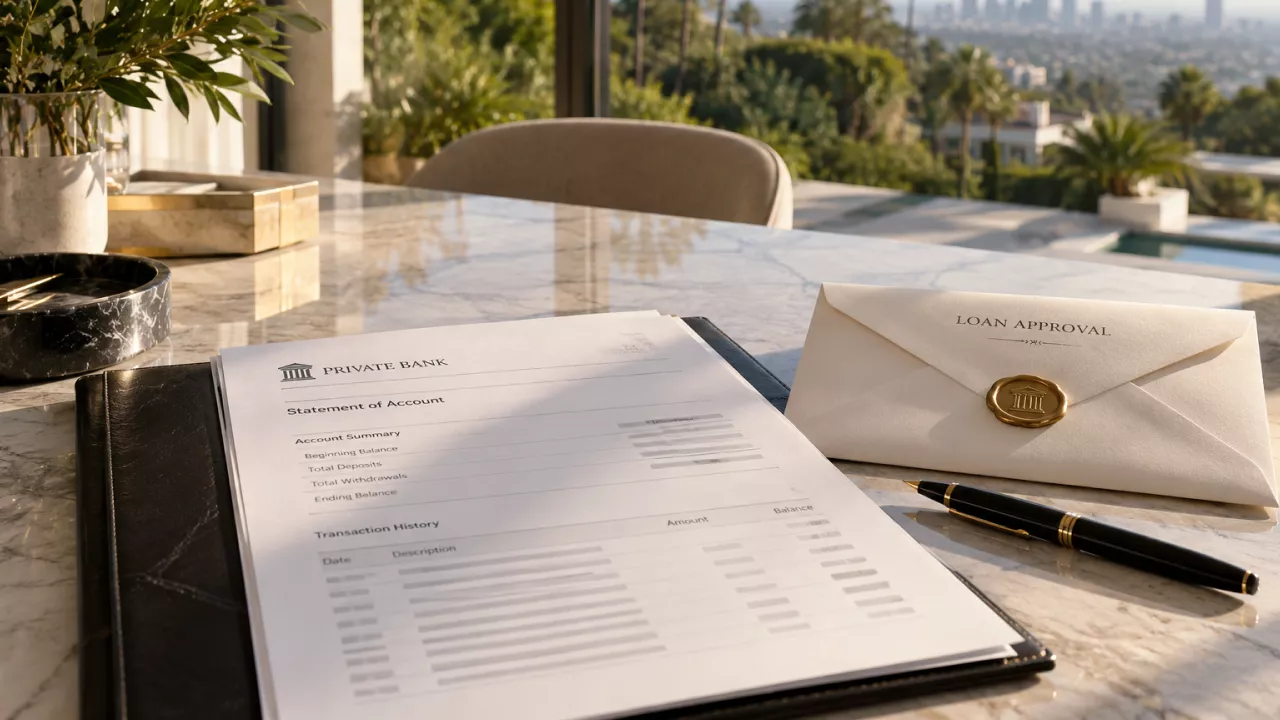
This responsibility is also established by law. Under California Civil Code section 2079.16, an agent representing only the buyer owes fiduciary duties of utmost care, integrity, honesty, and loyalty. In practical terms, you should be able to expect a candid assessment of every property you consider.
Since January 1, 2025, California’s AB 2992 has required buyer’s agents to enter into a written representation agreement no later than the time an offer is made. The agreement must specify the services provided, compensation, payment timing, and an expiration date within three months. Under the National Association of Realtors (NAR) settlement, agents who participate in an MLS must have a signed buyer representation agreement in place before showing you a property. The agreement also establishes the agent’s compensation, which cannot exceed the amount you have agreed to, regardless of whether it is paid by you, the seller, or another party.
Your agent can also help you begin the financing process by introducing lenders familiar with jumbo loans. If you’d like to learn more about how I work with buyers, you’re welcome to contact Gigi.
Step 3: Arrange Financing or Proof of Funds
At this price point, buyers typically pay cash or use a jumbo loan. Either way, proof of funds or appropriate financing documentation should be ready before property tours begin. Jumbo loan approval often takes two to four weeks and may take longer when assets are held abroad. Because Fannie Mae and Freddie Mac do not purchase jumbo loans, lenders establish their own requirements, which often include a substantial down payment, strong credit, cash reserves, and detailed underwriting. I recommend obtaining a fully underwritten approval rather than relying on a prequalification letter. A cash purchase can simplify the process and shorten the timeline, although it also ties up capital. Buyers relocating from abroad should begin early, as lenders may require translated income and asset records, and sellers often prefer funds to be held in a US account.
Step 4: Search Beyond the Portals, Including Off-Market Homes
Online property portals are a useful starting point, but they should not be your only source. Some of the Westside’s most desirable homes are marketed privately through agent networks, and finding the right property may take anywhere from a few weeks to several months. Most luxury homes advertised online appear through the MLS, the shared listing database used by real estate agents. Off-market, or pocket, listings are shared more selectively, offering greater discretion but less transparency around pricing.
Rules governing privately marketed listings are set by individual MLS organizations rather than by a single statewide law, and they are being challenged in court. On October 5, 2026, CRMLS filed a lawsuit against Compass concerning these practices. NAR’s Clear Cooperation Policy continues to require listings to be submitted to the MLS within one business day of public marketing, while options introduced in 2025 also provide for office-exclusive and delayed-marketing listings. Ask your agent which private networks they can access and how those opportunities are shared. Similar practices exist in Beverly Hills, the Hollywood Hills, and Bel Air, where some properties never appear on public websites.
Step 5: View Homes and Make a Strong Offer
Concentrate on properties that genuinely meet your criteria, then submit a written offer when you find the right home. In California, buyers generally use the C.A.R. Residential Purchase Agreement. Your agent presents the offer and negotiates the terms with the listing agent, often over the course of a few days.

A competitive offer involves more than the purchase price. Common contingencies address inspections, the appraisal, and financing. Each contingency has a specific deadline that begins on the date the offer is accepted. These deadlines can be adjusted if both parties agree in writing. If a buyer does not remove a contingency or take the required action by the agreed deadline, the seller may issue a formal Notice to Buyer to Perform, giving the buyer a specified period to respond before the seller may cancel the contract.
Pricing becomes particularly complex when a property has no close comparison, such as a distinctive Bel Air estate without a recent comparable sale. In these cases, appraisers may place greater weight on land value and rebuilding costs. I view those figures as a starting point for evaluating the property, not necessarily the final measure of its worth.
Step 6: Complete Due Diligence During Escrow
Escrow gives you time to verify the property’s condition and the terms of the transaction before closing. During the contingency period, you arrange inspections, review disclosures and title documents, and finalize financing. The full escrow process often takes around 30 days.
The seller provides a Transfer Disclosure Statement addressing known defects and the property’s condition, along with a Natural Hazard Disclosure identifying applicable earthquake, fault, flood, and fire hazard zones. Parts of Bel Air, Brentwood, and Pacific Palisades lie within Very High Fire Hazard Severity Zones, where vegetation clearance requirements apply, and the Los Angeles Fire Department conducts annual inspections. Regardless of location, confirm that suitable insurance is available before removing contingencies. If you are financing the purchase, coverage must be in place before closing.
Arrange any specialist inspections the property requires, which may include roof, pool, sewer, geological, and hillside assessments in addition to a general home inspection. Review the preliminary title report carefully for easements, liens, and other recorded matters.
Step 7: Close, Take Possession, and Settle In
Closing brings together the final signatures, transfer of funds, and recording of the deed with the Los Angeles County Registrar-Recorder. Once recording is confirmed, usually within a day or two after funding, you can receive the keys.
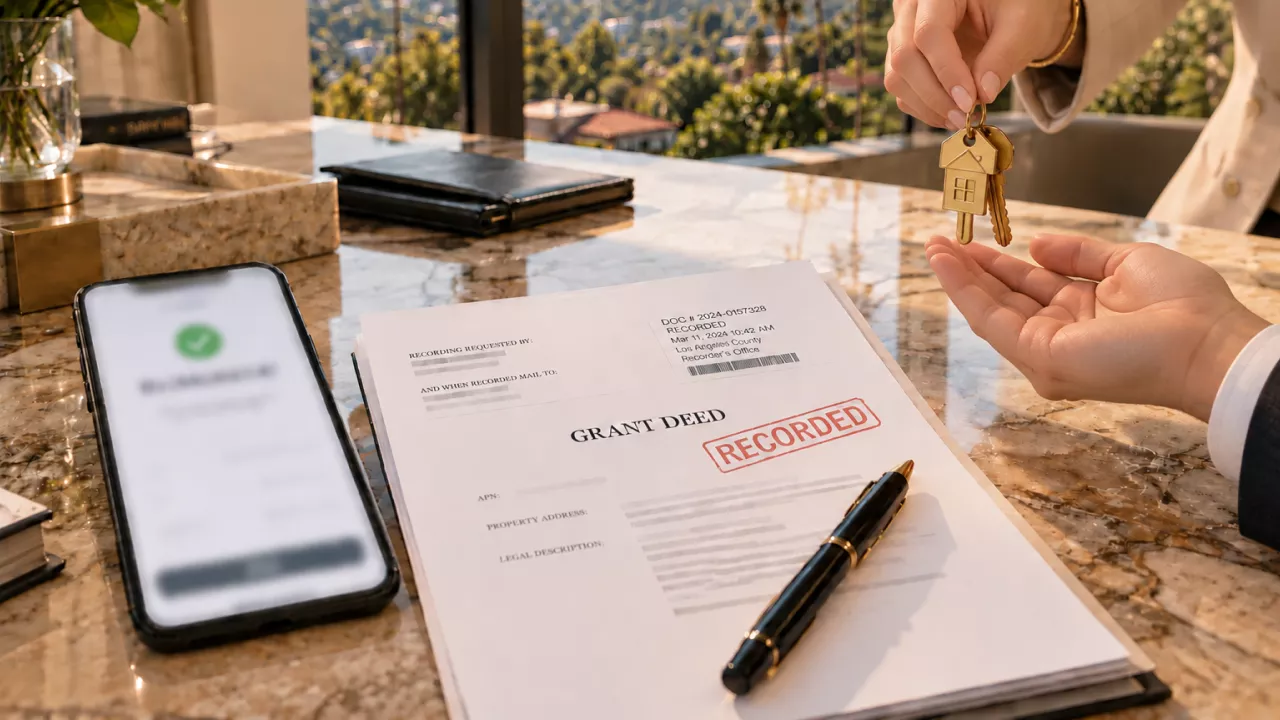
You sign your loan documents before a notary, while the seller signs the deed. Before transferring funds, review the settlement statement and verify wire instructions directly with your escrow officer by phone, never by email alone. The statement also sets out transfer taxes. Brentwood, Bel Air, and Pacific Palisades fall within the City of Los Angeles, where a base transfer tax of 0.45% applies alongside Measure ULA. For closings after June 30, 2026, Measure ULA is 4% on transactions above $5.4 million and 5.5% above $10.9 million, with the applicable rate charged on the full sale price. These transfer taxes are typically paid by the seller.
However, when a property’s sale price is close to a tax threshold, even a small difference in the final price can significantly affect the seller’s tax liability and may factor into negotiations. Los Angeles County also charges $1.10 per $1,000, while Santa Monica has its own city transfer tax rates, which rise substantially for sales starting at $8 million. I always verify the rates applicable on the closing date.
Once you take possession, arrange to change the locks and, if the property is in a fire zone, promptly address any required vegetation clearance. With that, the process of buying a home in Los Angeles is complete, from your first shortlist to receiving the keys.
What I See as Westside Buyers Move From Search to Keys
In my experience, three aspects of buying a luxury home in Los Angeles deserve particular attention: coordinating the necessary inspections, insurance, and financing during escrow; gaining access to off-market properties; and helping international buyers navigate the unfamiliar aspects of the American real estate process.
The first is escrow. Insurance quotes, geological reports, and international fund transfers often take longer than buyers expect, so I encourage clients to begin arranging all three as soon as their offer is accepted. The second is access to off-market properties. These opportunities often emerge through conversations within an agent’s network rather than online searches, and prepared buyers can act when a suitable home becomes available. The third involves the questions European buyers frequently raise when relocating: who each agent represents, what closing will cost, which schools are nearby, and whether a property can be insured. For more information about Westside neighborhoods and market trends, the Westside market magazine is another useful resource.
Your Next Step Toward a Westside Home
Buying a luxury home in Los Angeles comes down to following the right steps and making informed decisions along the way. An online listing alert cannot tell you whether a home is overpriced, when an off-market opportunity is worth pursuing, or when it may be better to walk away. If you’re considering a purchase, I’d be happy to discuss your plans. You can reach me by email, and I generally respond personally within one business day.
FAQ
The search can take from a few weeks to many months. Once your offer is accepted, escrow often lasts around 30 days, sometimes less for cash, depending on your financing and the inspections the home requires.
Yes. Many Westside homes sell through agent networks and pocket listings without ever appearing on public websites. Your access depends largely on your agent’s relationships.
Only if you borrow more than the FHFA conforming limit, $1,249,125 in Los Angeles County for 2026.
Yes. Cash removes the loan contingency and gives the seller greater certainty, though price and terms still decide the outcome.
Yes, with private or virtual viewings and an agent you trust. Expect additional source-of-funds documentation, and a tax advisor or attorney can help with the ownership structure.
Interested in a Consultation?
Tell Gigi what you are buying or selling, where and when. She replies personally, in English or German.
Gigi replies personally within 24 hours.Kept confidential. No calls unless you ask for one.